
Energy-Saving Principle of Revolving Doors and Its Relationship with Building Carbon Neutrality
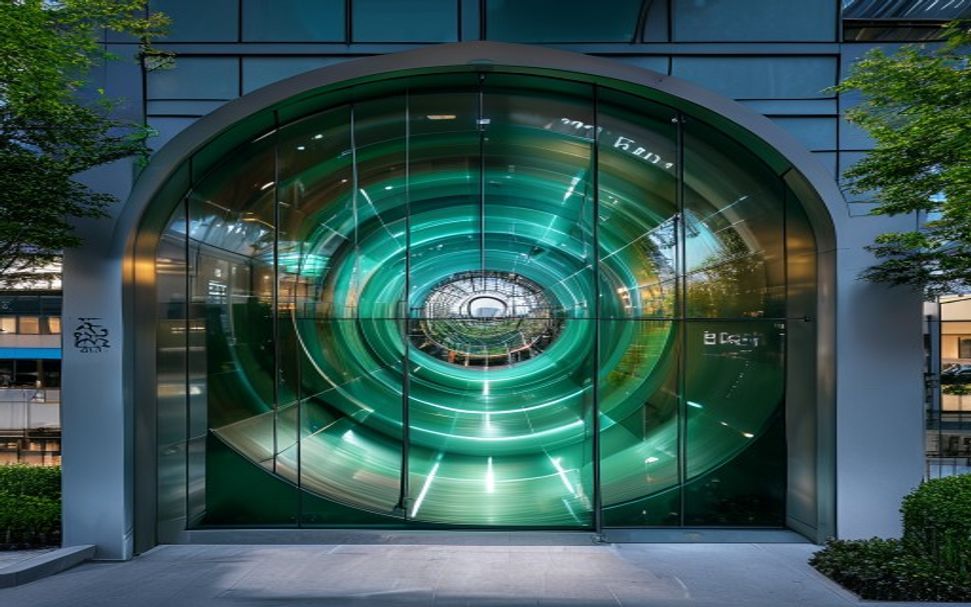
Energy-Saving Principle of Revolving Doors and Building Carbon Neutrality
In the context of building carbon neutrality, energy management at entrances and exits is receiving increasing attention. Studies show that energy loss caused by door openings in commercial buildings accounts for 15%-25% of total HVAC energy consumption. By adopting a 360° continuous rotation passage method, revolving doors can reduce air exchange at the door opening by 60%-80% compared to traditional hinged doors and sliding doors, significantly lowering cooling and heating loads.
This series of revolving doors uses double-layer hollow tempered glass (8+12A+8 configuration) and inflatable sealing structures, achieving a low heat transfer coefficient K value. Taking a three-wing revolving door with a diameter of 3000mm as an example, the annual energy savings from air conditioning under typical climate conditions are significant, equivalent to reducing considerable carbon emissions. When used in conjunction with an air curtain, the energy-saving effect can be further enhanced.
- Door opening energy loss accounts for 15%-25% of HVAC
- Revolving doors reduce air exchange by 60%-80%
- Significantly reduce air conditioning energy consumption
- Better effect when used with air curtain